THE IDEA
Two eyes, two views
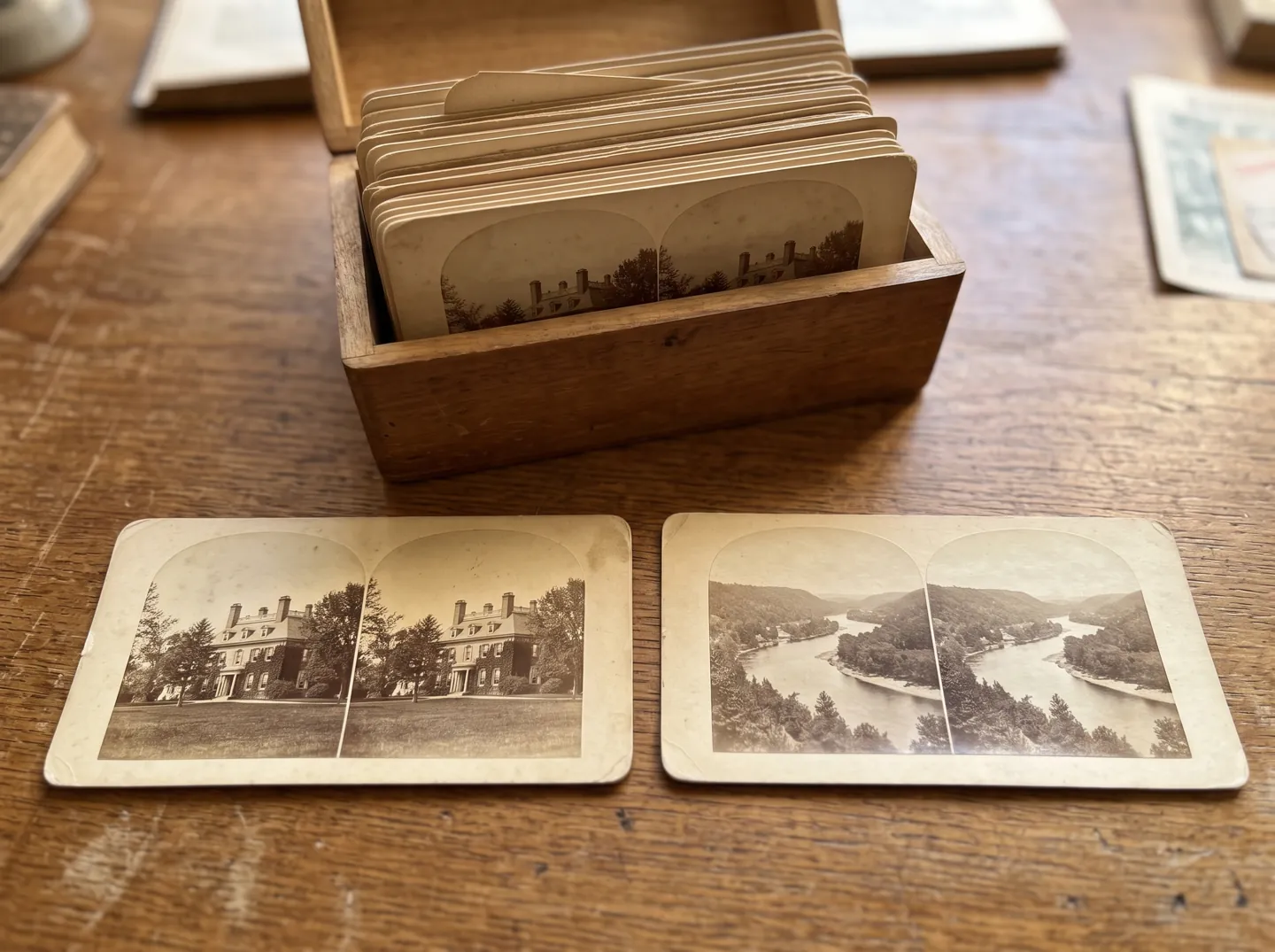
Charles Wheatstone showed the Royal Society in 1838 that when each eye sees only its own picture of an object, the brain fuses them into one solid-looking view.
Ways to view photopairup
Start
HOW STEREO PHOTOS WORK
Your eyes already take a stereo pair.
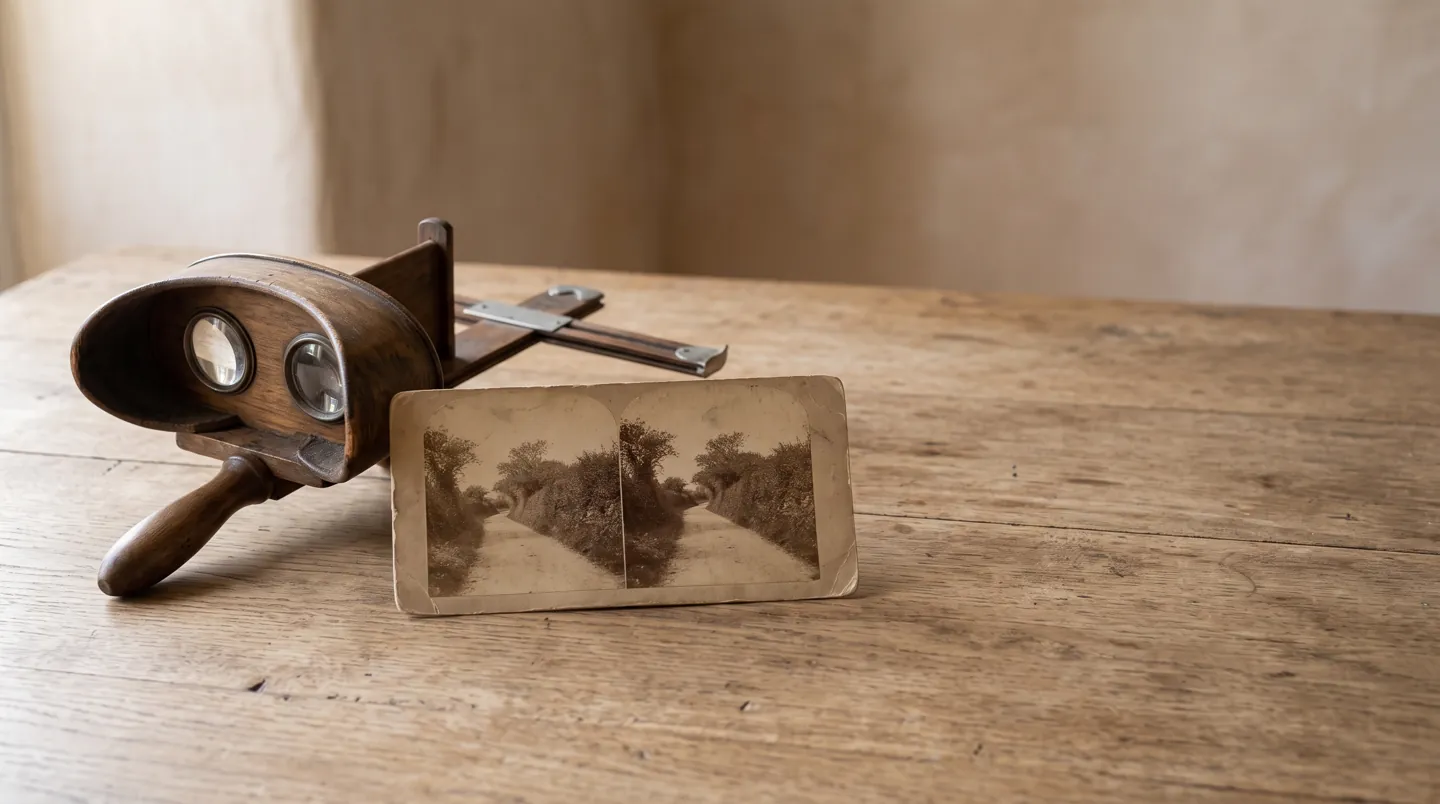
Each eye sees the world from a slightly different place, and the brain turns the difference into depth. Show each eye its own photograph, taken a few centimetres apart, and the same trick works on paper.
≈ 63 mmbetween your eyes
Try a way to viewKeep in mind
THE SHORT ANSWER
The brain fuses two views into one.
The small differences become depth.
THE IDEA
Charles Wheatstone showed the Royal Society in 1838 that when each eye sees only its own picture of an object, the brain fuses them into one solid-looking view.
Ways to viewTHE CAMERA
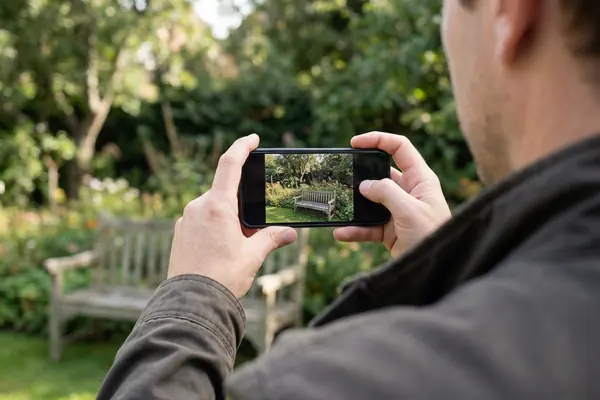
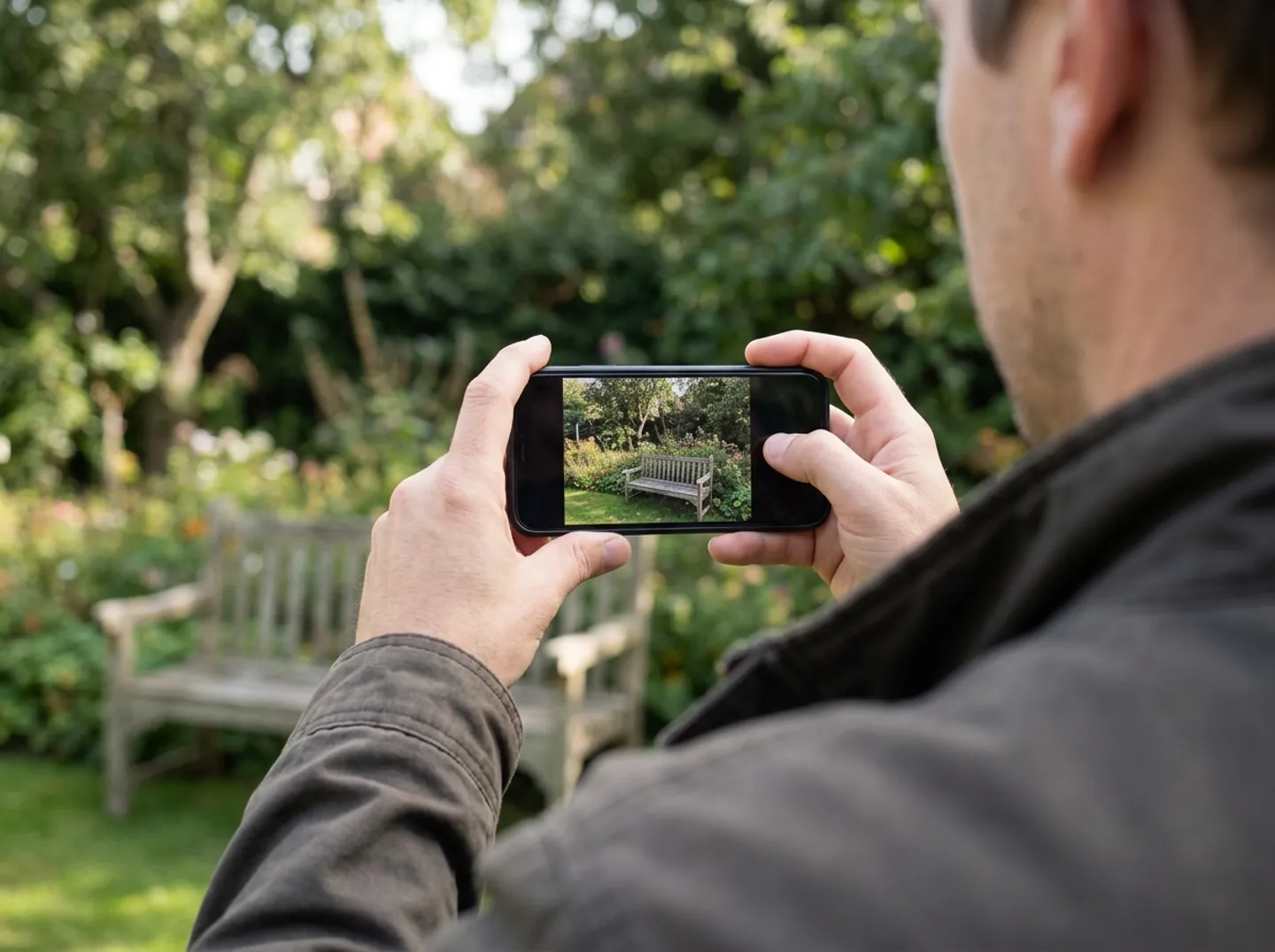
The simplest method: take a photo, shift the camera sideways by about 7 cm without tilting it, and take a second one. It works for still subjects.
Take your ownTHE CRAZE
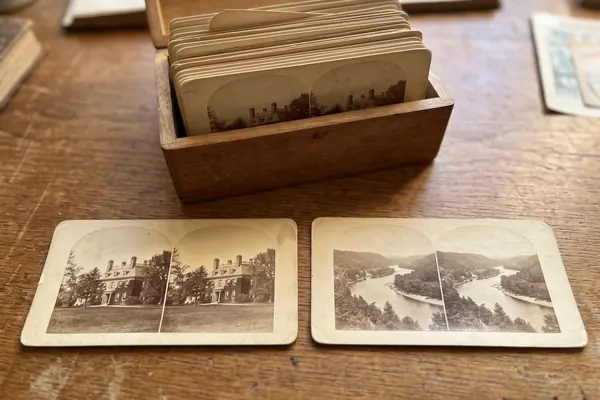
After lens stereoscopes were shown at the Great Exhibition of 1851, stereo cards became a mass medium, popular in waves from the 1850s to the 1930s.
See the numbersWAYS TO VIEW A PAIR
Pick a way to view a side-by-side pair to see how it works. The bar shows how much work it asks of your eyes.
Based on reference descriptions of stereoscopes and freeviewing. If viewing pairs gives you eye strain or a headache, stop.
TWO NUMBERS WORTH KNOWING
One figure on the gap a stereo pair copies,
one on how fast the Victorian craze took off.
≈ 63 mm
Average distance between the eyes
The average interocular distance is about 63 mm. For comfortable freeviewing, distant points in the two pictures should be no further apart than the viewer's eyes.
EYE SPACING · REFERENCE
250,000
Stereoscopes produced in the first rush
After Jules Duboscq improved Brewster's lens design in Paris, a 3D industry grew almost overnight: 250,000 stereoscopes were produced and a great number of stereo cards sold in a short time.
THE 1850s BOOM · REFERENCE
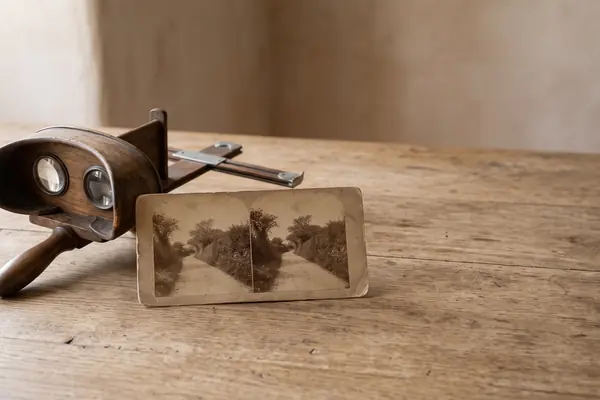
The Science Museum Group holds a mahogany reflecting stereoscope originally used by Sir Charles Wheatstone, made in England around 1850 (object 1884-6).
FOUR STEPS TO A PAIR
Any camera or phone will do. The subject must stay still between the two shots, so start with a building, a still life or a garden on a calm day.
Step 1
Find a horizontal line in the background and keep it in the same place in both shots so the camera does not tilt.
Step 2
Take the first photo, then move the camera sideways about an eye-width without turning it, and take the second.
Step 3
Sliding a tripod along a straight line on the floor, or a simple slide bar, gives a more exact shift than moving your body.
Step 4
For a viewer or parallel freeviewing, place the left-eye photo on the left. For cross-eyed viewing, swap them.
FROM LAB TO LIVING ROOM
Wheatstone's first stereoscope used two mirrors at 45 degrees, with drawings, because practical photography was not yet available. David Brewster's lens design made the viewer small enough to hold in the hand.
Stereoscopes sat in Victorian parlours and in early psychology laboratories, where they were used to study how the two eyes combine images. The hand-held reel viewer, first seen at the 1939 New York World's Fair, works on the same principle.
Questions
It shows each eye a slightly different picture of the same scene, as the two eyes see in real life. The brain fuses the pair and reads the small differences as depth.
For an ordinary scene, about an eye-width. A stereo photography guide suggests shifting the camera sideways by about 7 cm; the average distance between the eyes is about 63 mm.
Many people can learn to freeview, either cross-eyed or parallel. Cross-eyed viewing is usually easier for beginners, but freeviewing can tire the eyes because focus and eye angle do not match normal vision.
Charles Wheatstone presented his mirror stereoscope to the Royal Society in 1838. David Brewster later designed a smaller lens version, shown in commercial form at the Great Exhibition in 1851.
Seeing depth from a pair depends on binocular vision. Reference sources say a minority of people cannot properly see 3D images because of a variety of conditions.
Destination
Updated
ABOUT THIS NAME
photopairup.com is part of the DoodleSale portfolio. It isn't in an auction right now, but you can ask about leasing it.